The Importance of Control Groups in the Scientific Method
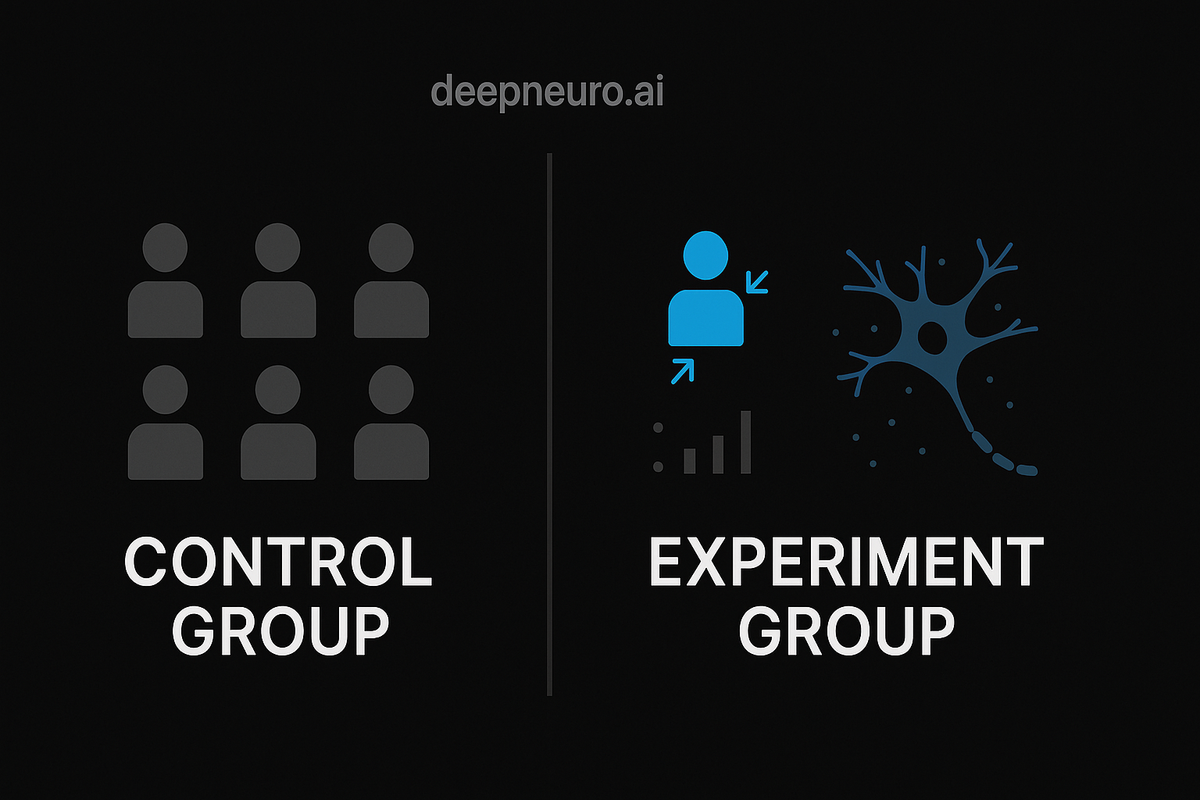
Proper scientific method isn’t just for labs – it’s essential for business decisions too. The cornerstone of this method is the use of control groups, which allow us to separate the signal from the noise.
Too often, executives roll out a new process or marketing campaign and then claim victory if sales tick up. Without a proper control group or design like a crossover, you can’t know whether the change caused the outcome or if it was just random fluctuation or other factors. Without rigorAt its core, the scientific method follows a straightforward sequence: observe a phenomenon, pose a question, formulate a hypothesis, test that hypothesis through controlled experimentation, and then analyse and draw conclusions. Replication and peer review are essential to ensure the findings aren’t just one-off anomalies.
A control group is the backbone of this process. By holding all variables constant except the one being tested, it provides a baseline against which the experimental group’s results can be compared. This design helps eliminate misleading correlations. If both groups experience the same conditions apart from the intervention, any difference in outcomes can be more confidently attributed to the intervention. Without that baseline, you risk mistaking correlation for causation. Human systems—whether biological or business—are complex, and countless factors influence outcomes. The control group acts as a reality check, reminding us that not every change we observe is the result of our actions. It’s a humble approach rooted in centuries of scientific tradition, and ignoring it in favour of quick wins only invites error.ous experimental design, you’re fooling yourself.
Science has spent centuries building frameworks to minimise biases and spurious correlations. Businesses, in their rush, often ignore these fundamentals. If we care about making decisions grounded in reality, we need to adopt proper experimental protocols: define hypotheses, establish control and experimental groups, ensure randomisation, collect data, and analyse differences with scepticism. Only then can we stop guessing and start knowing.